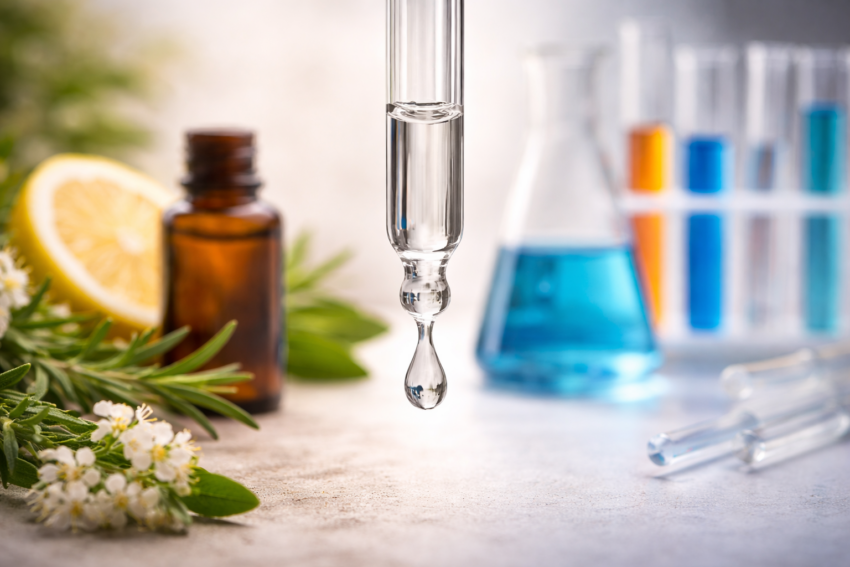
“All-natural candles are the best.” “My candles are scented only with essential oils.” “Nothing is safer than nature!”
These statements are commonly used by candle makers these days. They appeal to a simple assumption: that natural automatically means safer, cleaner, and superior. It is an understandable belief. I agree that when it comes to candle making, whether just as a hobby or with the intention to sell them, there should be no shortcuts. Understanding raw materials and striving for quality should always be the priority.
However, the idea that “all-natural” automatically equals “better” is an oversimplification. Natural ingredients do not guarantee safety, nor do they guarantee performance. A poorly constructed candle made from natural-based wax and essential oils can burn improperly, produce soot, overheat, or behave unpredictably. On the other hand, a well-formulated candle – whether scented with candle-safe essential oils, fragrance oils, or a blend – can burn cleanly and safely when properly designed and tested. The determining factor is not the ingredients on their own, but proper formulation and combustion behavior.
Essential oils are often presented as the superior alternative to fragrance oils. They are highly concentrated plant extracts with a long history of aromatic use, but their effects depend heavily on context and method of use. Also, their behavior changes under combustion. Burning alters chemical structures, and not all essential oils are suitable or stable when exposed to sustained heat. What works in a diffuser does not automatically translate to safe performance in a candle.
Safety in scented candles does not depend on whether a fragrance originates in nature or is synthesized in a laboratory. It depends on whether the material has been evaluated for its intended use. The International Fragrance Association (IFRA) sets safety standards for fragrance ingredients across product categories, including candles. Compliance with these standards means that a fragrance has been assessed for exposure limits and application-specific safety parameters.
In candle making, safety is determined by testing, regulation, and responsible formulation – not by marketing language. “Natural” is not automatically safer, and “synthetic” is not automatically harmful. What ultimately defines a good candle is how it burns: cleanly, consistently, and within safe limits.